AI Ad Creation
How AI videos become advertising
Small and medium-sized businesses (SMEs) can already run ad campaigns in their region with small budgets. Geotargeting makes it possible to deliver campaigns very precisely. This also works for video advertising online, or on television via Addressable TV (ATV) and Connected TV (CTV). The problem: producing a spot is hardly realistic with small campaign budgets.
The missing video ad
A video ad needs a minimum level of design: images, copy, timing, voice-over, logo, maybe a few graphic elements and an end card, technical specifications. If advertising is to be placed in an environment of professional brand communication, the creative needs to bring a certain level of quality.
Professional video producers and agencies can of course deliver this. But even a small video or photo shoot plus editing quickly burns through a considerable part of the budget that could otherwise go into media spend.

Video advertising should also be affordable for small, regional businesses.
What can we do about that?
The prototype
We took this problem on as a prototype: using AI, all aspects of video ad production were to be automated. AI models can generate high-quality videos, but not a complete commercial. Rather, the different trades of film production, from concept to audio and video, have to be orchestrated and synthesized into one complete piece. That is a task for an agentic workflow, where the complexity of the overall task is broken down by distributing it across different specialized actors, or agents.
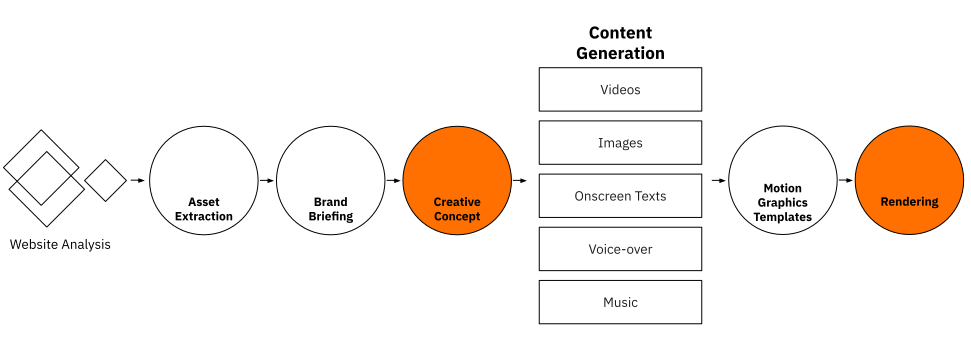
Established role distributions served as our model: together with professionals from the commercial film industry, we looked at the steps that come together in a classic production. Our multi-agent system in the prototype was modeled on this flow.
There is an agent that analyzes brand, offer and target group. Others review the available material, evaluate images and videos, and select what suits the message to be told. Others write voice-over scripts and onscreen texts, plan scenes, think about movement and transitions, or QA the overall result. Quite anthropomorphically, the data classes in the code carry the job titles of their human counterparts:
from lib.subagents import (
    ArtDirector,
    BrandManager,
    CopyWriter,
    MusicComposer,
    ScreenWriter,
    VideoEditor,
    VisualAnalyst,
    VoiceRecordist,
)
At the end, there is a video ad with scene structure, voice-over, onscreen texts, logo, end card and rendered output format.
The website as the only input
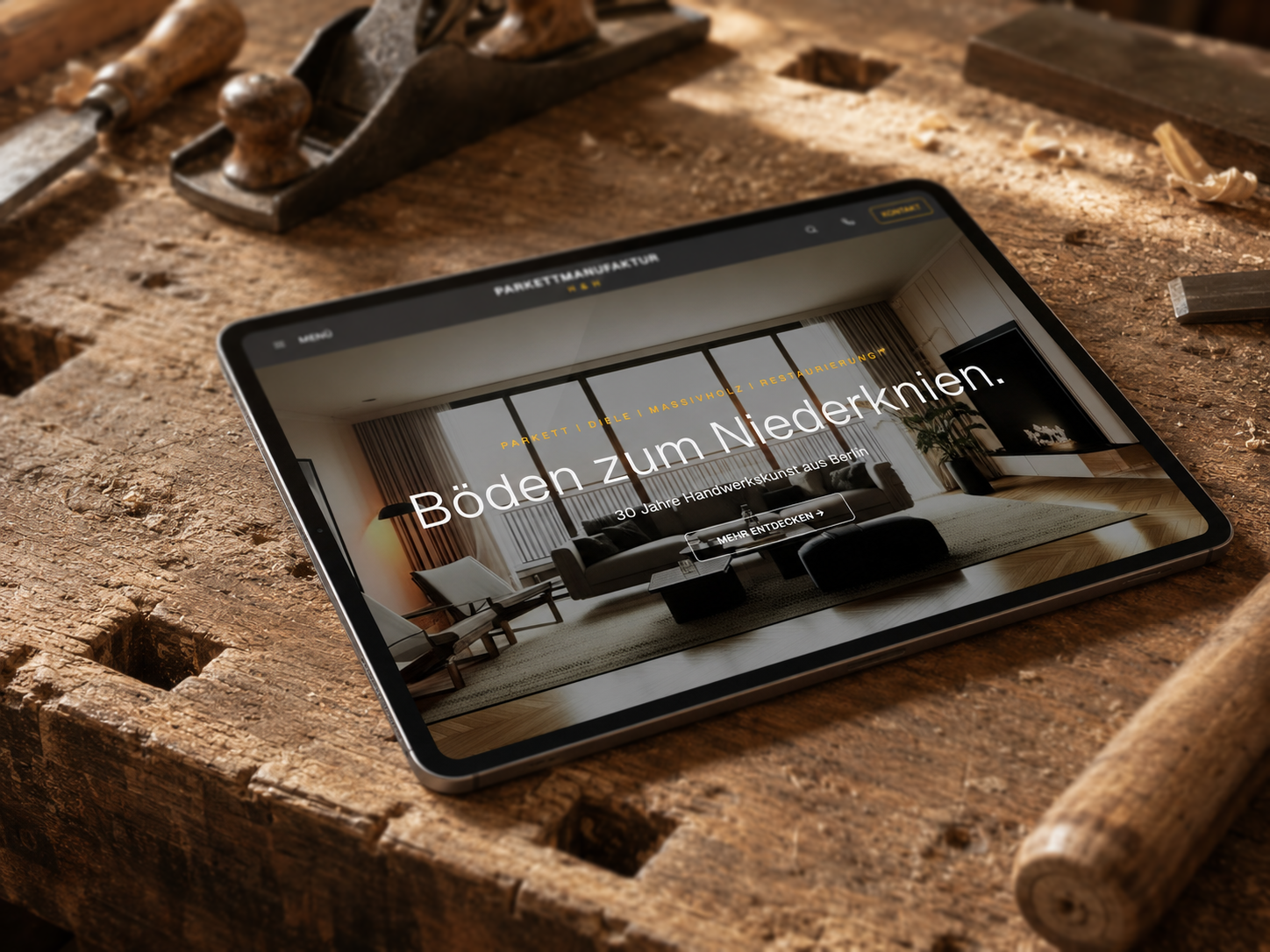
With the prototype, we wanted to show how far one can get when even the smallest companies bring neither their own marketing department nor press material. Ideally, the SME users themselves should have to contribute almost nothing, especially nothing that requires advertising knowledge or design skills. The only input for the production workflow should therefore be what we assumed to be the minimum requirement for reach-based advertising: the company website. The content of the website should give the trained agents information: What does the company do? How does it present itself? What tone is recognizable? What message could work? What target group can be derived?
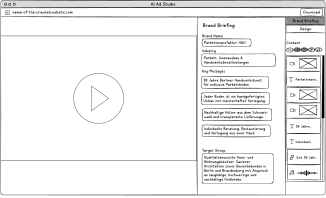
After the URL is entered, the prototype and its implemented agent team set out: the website is visited, texts, images, videos, colors, fonts, logos and visual cues are collected and pulled together into a material pool. This is the source material for the video ad.
Why AI alone is not enough
Generative AI can create convincing images. It can write copy, synthesize voice-over, compose music and produce individual video elements. But if you simply line these parts up, you still do not get good advertising. The shared design framework is missing.
Our approach was therefore to connect generative AI with a design-oriented building block system. With the help of motion graphics designers, we built a collection of template elements that can be combined with each other and come from a shared style: scene layouts, text areas, image areas, transitions, logo placements, end cards and animations.
So the AI does not decide completely freely what everything looks like. It analyzes and selects, formulates and fills. The workflow and the design guardrails of the building block system ensure that the result is not a random AI cut-up, but a consistent video ad made from one piece.
The result
What we learned
The not quite so new insight appears here as well: the value does not lie in the LLM model and its powerful capabilities. The actual value creation happens in setting up everything around it, or in newer terms the “agent harness”: the tools and capabilities the agents receive, and the design of the workflow itself.
This is primarily not about technology. The achievement lies in cross-disciplinary transfer, for example in understanding and describing the intuitive decisions of a camera operator or the conceptual approach of brand consultants in such a way that an AI can emulate them.
AI needs a framework that is controlled professionally, visually and technically.
The road ahead
The question was: Can a video ad be generated automatically for SMEs if AI is not understood as the sole creative machine, but as part of a structured production chain?
The prototype shows: yes, this can work. We see great potential in this interconnection of technology, marketing expertise and film craft. Ultimately, this is about giving SMEs, regional businesses, associations and smaller institutions the opportunity to make their message visible in places where otherwise mainly the big brands appear.
The next step is further development along market feedback. The list of feature requests and ideas is already long.
Interested in the prototype?
We welcome feedback from media sales, agency work, SME marketing and video production and are happy to show the prototype in detail.
Other AI projects